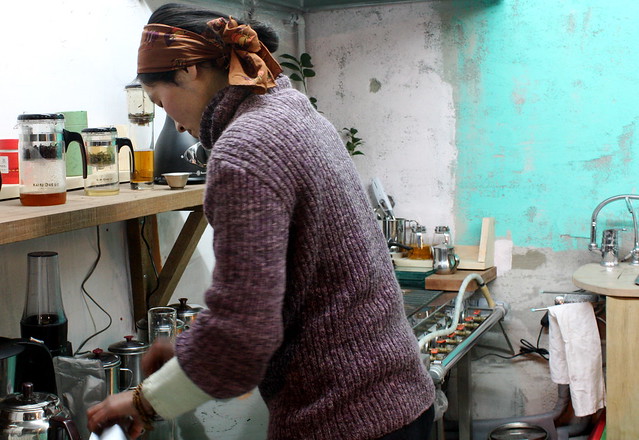
korean tea is different from what we commonly regard as tea because it can be made by using fruits, grains, and roots... much more than just leaves.
korea's commitment to eating seasonally extends beyond fruits and vegetables. it has been said that by ingesting the season's bounty as tea, our bodies assimilate the season's vital energy (chi). traditional teas embrace centuries-old wisdom used to link human life to nature. just as we naturally desire water after eating salty foods, teas made with seasonal ingredients provide elements our bodies crave at particular times of the year.
autumn's tea is omija. in korean, 오미자 (omija) means 'five taste berry'. the five flavors of this berry - sweet, sour, salty, bitter, and pungent - are uniquely distinct but can be somewhat compared to a cranberry.
our region of mungyeong is said to be the finest omija-producing region in the country. the pristine conditions deep in the mountains provide the perfect environment to cultivate the berry prized by epicureans and herbalists alike.
the omija harvest has just come in and i was oh-so-pleasantly surprised to receive a gift of the idolized berry from one of mayo's co-workers. i delightedly washed my three kilos of omija, layered them in a large glass jar with equal parts white sugar and sealed the lid to start the 100 day fermentation process. i'm thrilled to observe my berries as they ferment into the sweet and sour fruit extract i will be using to make omija tea to keep me warm in the new year!